
The most successful hospitality brands go beyond visual identity to create a distinctive and memorable experience. From the logo and typography to the atmosphere, interiors and guest journey, every detail contributes to a cohesive brand world.
This article explores how atmosphere, rituals, materials and storytelling shape memorable hospitality brands, supported by research and real-world examples.
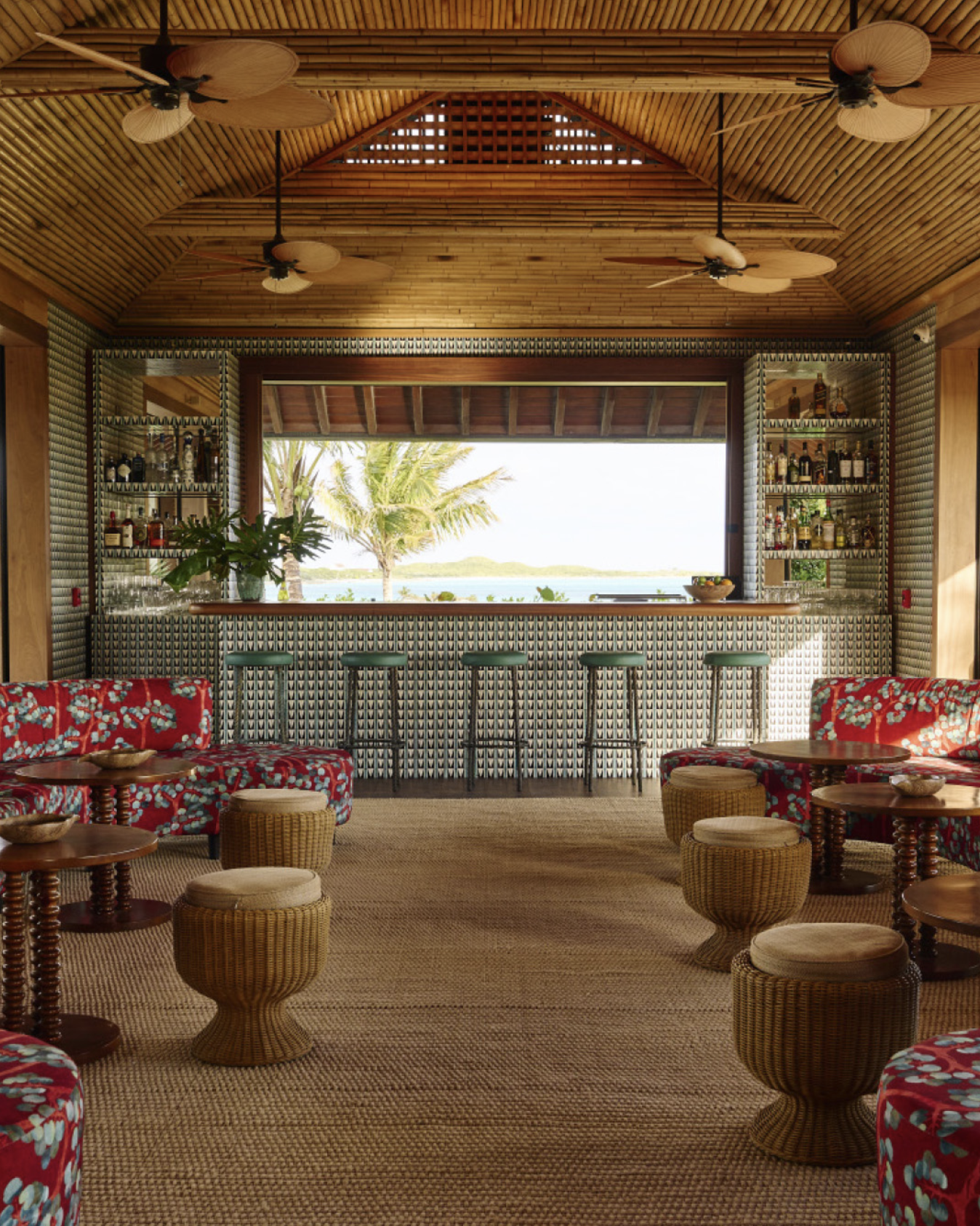
Image: Norman’s Cay Yacht Club.
Key takeaways
A logo identifies a hospitality business. Atmosphere, ritual and material choices are what guests actually carry home.
Peer-reviewed research links ambient music and scent with higher pleasure, satisfaction and behavioural intention, though the effects are small to medium and vary between studies.
Rituals that guests take part in measurably raise enjoyment. Watching a ritual does not do the same.
Restraint matters: in one hotel study, guests wanted scent in public areas, not in rooms or restaurants.
Place-first branding needs art direction and storytelling working from the same brief, not a logo handed over to the interior team.
What does "feeling like a place" actually mean?
A brand feels like a place when a guest can describe it in sensory and spatial terms without naming it. It has a temperature, a sound, a smell, a texture underfoot and a rhythm to the day. It also has a point of view about where it is: the city, the building, the neighbourhood, the people who work there.
A brand that feels like a brand does the opposite. The same palette, signage and tone of voice are applied identically wherever it appears, and the guest recognises it mainly through repetition of visual identity.
The distinction matters commercially. Travellers increasingly choose where to go for what they will do and feel there. A McKinsey report on travel experiences, published through Skift in September 2024, describes the experiences market as a more than $1 trillion opportunity, and notes that nearly half of experience business is still transacted offline (Skift/McKinsey, 2024). The same report, as summarised by Hospitality Net, found that 52% of Gen Z say they splurge on experiences, against 29% of baby boomers (Hospitality Net, 2024). Demand is moving toward lived experience, and a logo cannot deliver one.
How does atmosphere shape what guests remember?
Atmosphere is the sum of light, sound, scent, temperature, acoustics and spatial proportion. It is the layer guests feel before they consciously notice it.
A meta-analysis of 66 studies and 135 effects (N = 15,621) in the Journal of Retailing found that environments with music or scent produced higher pleasure, satisfaction and behavioural intention than environments without. The same paper found that warm colours raise arousal while cool colours raise satisfaction. The authors describe the average strength of these relationships as ranging from small to medium, and note that effect sizes vary significantly between studies (Roschk, Loureiro & Breitsohl, 2017).
Two honest readings follow. Atmosphere is a real, repeatable lever. It is also not magic: results depend on context, execution and the guest, which is why it needs designing, testing and editing rather than copying.
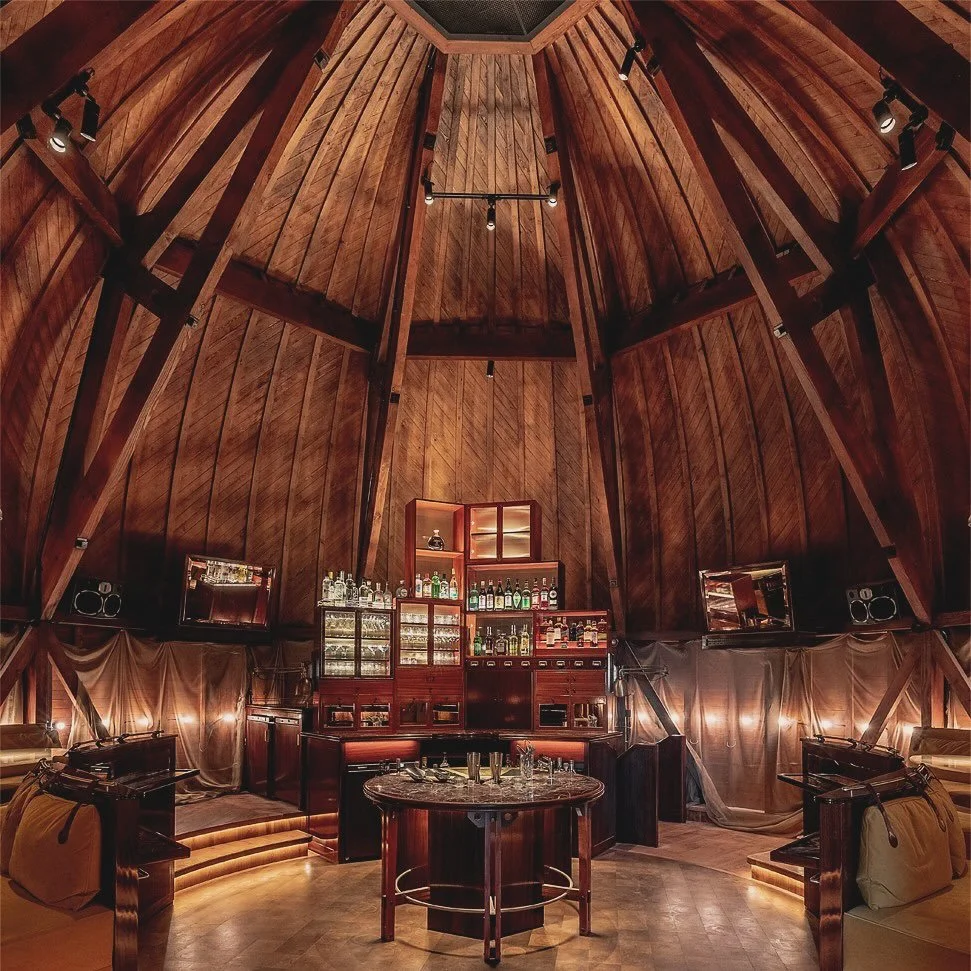
Image: The House of KOKO.
What does a signature scent really do?
Scent is the most cited atmospheric tool in hospitality, so the evidence deserves care. A survey of 326 guests in the lobby of a Hong Kong luxury hotel chain with a signature scent found that over 90% noticed it, and "refreshed" was the highest-rated feeling at 5.85 out of 10. Guests who felt happiness or sensuality reported higher satisfaction and return intention, though the loyalty effect was modest. About 10% said they would buy the scent for home or office (Hospitality Net summary of Denizci Guillet, Kozak & Kucukusta, 2019).
The study also contains the most useful brief a creative agency could receive: guests mostly wanted scent in public areas such as lobbies, corridors and restrooms, not in guest rooms, function spaces or restaurants, and some reported headaches. A signature scent is an act of editing. More is not better.
Why do materials do more branding work than a logo?
Aesop's stores are a clear retail example of the principle, and hospitality can learn from them. In Leeds' County Arcade, the design uses recycled oak flooring that echoes the arcade's mosaic floor, English-quarried stone, locally sourced wood and second-hand Victorian shelving, with several shades of green throughout (Dezeen, 2025). In Montreal's Petite Bourgogne, solid brass, dark green synthetic suede, white oak and near-black walls evoke the neighbourhood's jazz-club history, with a curved layout compared to a wind instrument (Dezeen, 2018). Neither store looks like the other, yet both are unmistakably Aesop. The brand is a way of reading a place, not a template pasted onto it.
Note that Aesop is a retailer, not a hotel. The lesson transfers because the method does: start from the building and neighbourhood, choose materials that belong to them, and let the brand emerge from the decisions.
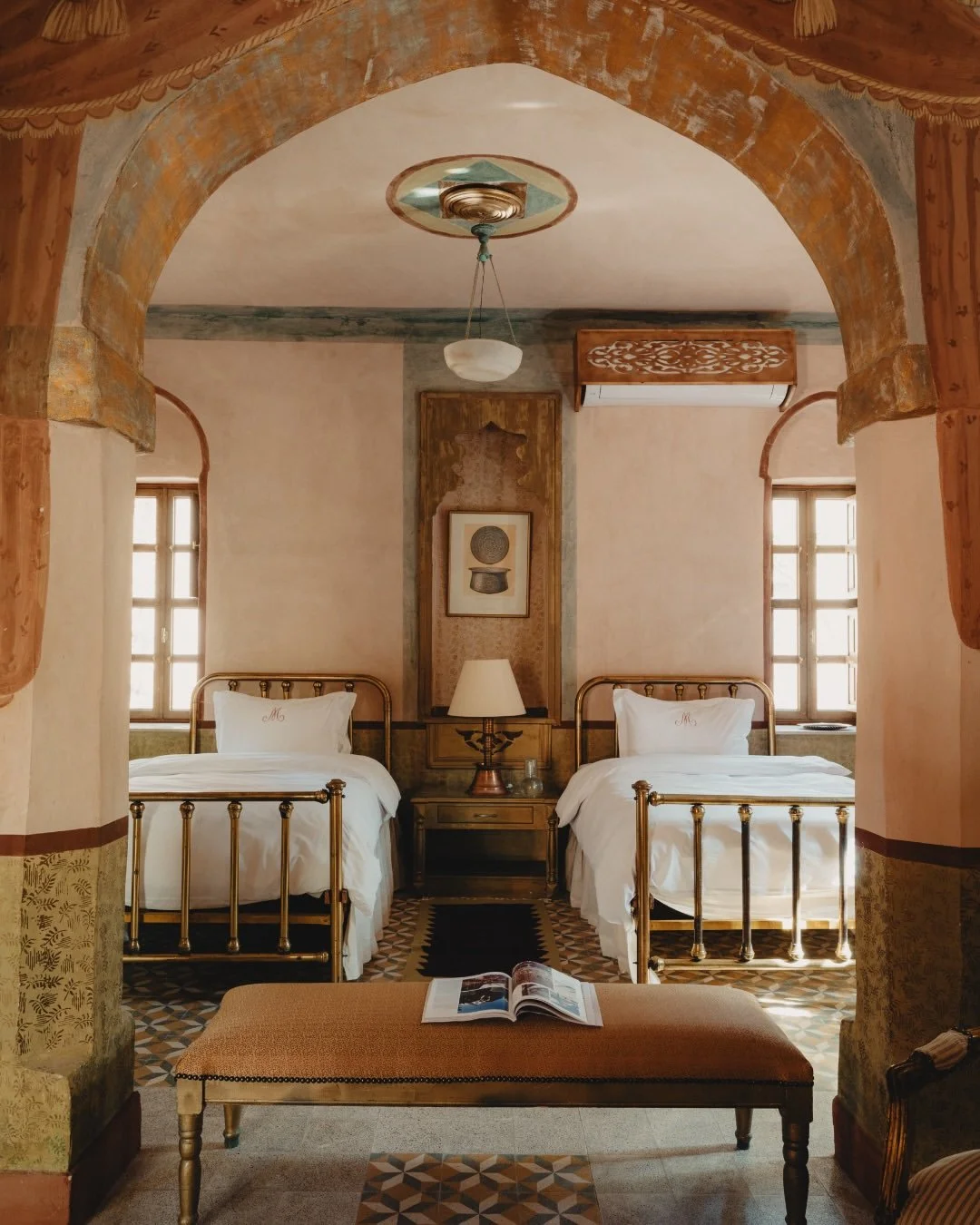
Image: Moudira Hotel by Mark Anthony Fox.
Where does art direction fit?
Art direction is where a loose idea becomes a coherent environment. It decides which of ten good ideas is the right one for this room, and which eight to cut. Good art direction in hospitality connects a mood reference to a physical palette, a lighting plan, a soundtrack, uniforms, tableware, printed matter and photography, so the guest meets one world instead of six departments.
At Corinthia Studio, our approach begins with understanding the brand's positioning, purpose, audience and distinctive character before developing its visual expression.
This is also where many brand projects break. If identity is delivered as a style guide and the interior, F&B and guest-communication teams work from separate briefs, the place and the brand drift apart. A creative agency that owns art direction across touchpoints keeps them joined.
How do rituals turn a stay into a memory?
A ritual is a short, repeated sequence with a clear beginning and end: the welcome drink, the evening turndown note, the way the bartender stirs, the bell at checkout. Rituals give guests something to take part in, and participation changes how an experience feels.
In four experiments published in Psychological Science, Vohs and colleagues found that performing a ritual before eating raised enjoyment of chocolate, lemonade and even carrots. Random gestures did not produce the same effect, and performing the ritual oneself raised enjoyment more than watching someone else do it. The authors' explanation is that rituals increase involvement in the experience (Vohs, Wang, Gino & Norton, 2013).
For hospitality, that points to a design rule: build moments guests can do, not only moments they can watch. Pouring your own tea from a particular pot, choosing a record for the room, tying the key to a ribbon. The ritual should feel native to the place; arbitrary theatre is the "random gesture" the research did not find helpful.
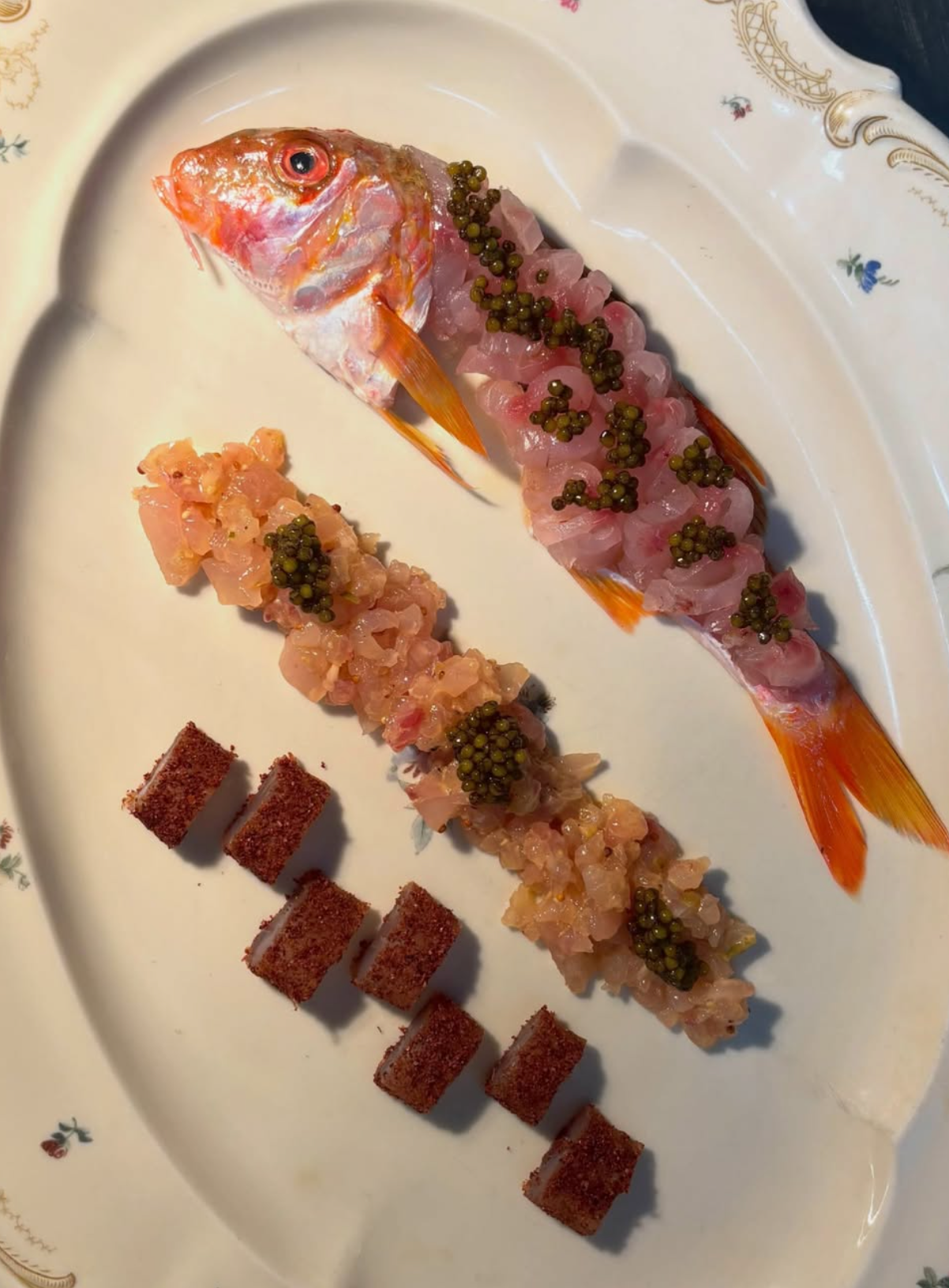
Image: Pau Sintes Juanico.
What is brand storytelling in a hospitality setting?
Brand storytelling in hospitality is not a founder's paragraph on the About page. It is the reason behind each decision a guest can see, taste or touch. Why this stone? Why this music at this hour? Why is there no reception desk?
Aman, widely credited with defining the quiet-luxury resort, is often described as dropping conventional lobbies and treating place as the primary amenity, with architecture drawing on local temple forms and materials (Hospitality Design, interview with Adrian Zecha). Soho House ties each House's design to its host city, using local suppliers and craftspeople (ROADBOOK). The common thread is that the story is told by the environment and its people, and the guest completes it.
Practical storytelling tests:
Can staff explain the story in one sentence without a script?
Does each major material, sound and ritual connect to it?
Would the story still be true if the logo were removed from every surface?
How should you brief an agency for a place-first brand?
Start with the place, not the logo. Share the building, the neighbourhood and the people. Ask what the agency would keep, restore or refuse to change.
Ask for a sensory brief. Light, sound, scent, touch and taste, with a clear statement of where each should be quiet.
Define two or three rituals that guests can perform, and who delivers them.
Agree how you will know it is working. Interview guests about what they remember. Read review language for sensory and place words, not just star ratings.
Put art direction and service design in the same room. Separate briefs produce separate brands.
Frequently asked questions
What does a brand experience agency do for a hotel or restaurant?
It designs the guest's felt experience of the brand: story, art direction, sensory atmosphere, rituals and service moments, alongside the identity itself.
What is the difference between a branding agency and a brand experience agency?
A branding agency typically defines identity: name, logo, typography, messaging. A brand experience agency carries that identity into the physical and human experience, including materials, atmosphere and service behaviour. The two overlap, and many firms do both.
Do scent and music in a hotel actually affect satisfaction?
Research suggests they can. A meta-analysis found higher pleasure, satisfaction and behavioural intention where music or scent is present, with small to medium effects. A hotel scent study found positive links with satisfaction and return intention, but modest loyalty effects and guest discomfort in some settings.
How do hospitality brands use storytelling and art direction beyond a logo?
They express the story through material choices, spatial design, sound, rituals, uniforms, tableware and photography, so guests experience the brand through the place itself.
Conclusion
The best hospitality brands are not louder, they are more specific. They know what their building smells like at seven in the morning, what the bar sounds like at nine at night, and what a guest will do with their hands on arrival. The logo is a signature on the work. If you are choosing a brand experience agency, choose the one that asks about the place first
